Why Generic Staging Fails
Generic staging lacks alignment with high-end properties. Stock furniture, mass-market accessories, and forgettable layouts undermine the architecture of a home rather than support it.
At the luxury level, buyers are evaluating lifestyle, light, and proportion. Generic staging signals a missed opportunity — and luxury buyers notice.
Staging vs. Decorating
Staging focuses on buyer appeal, not personal taste. Decorating reflects the homeowner; staging reflects the buyer.
The most effective staging is invisible. It allows the buyer to project their own life onto the home — not admire someone else's.
Strategies That Work
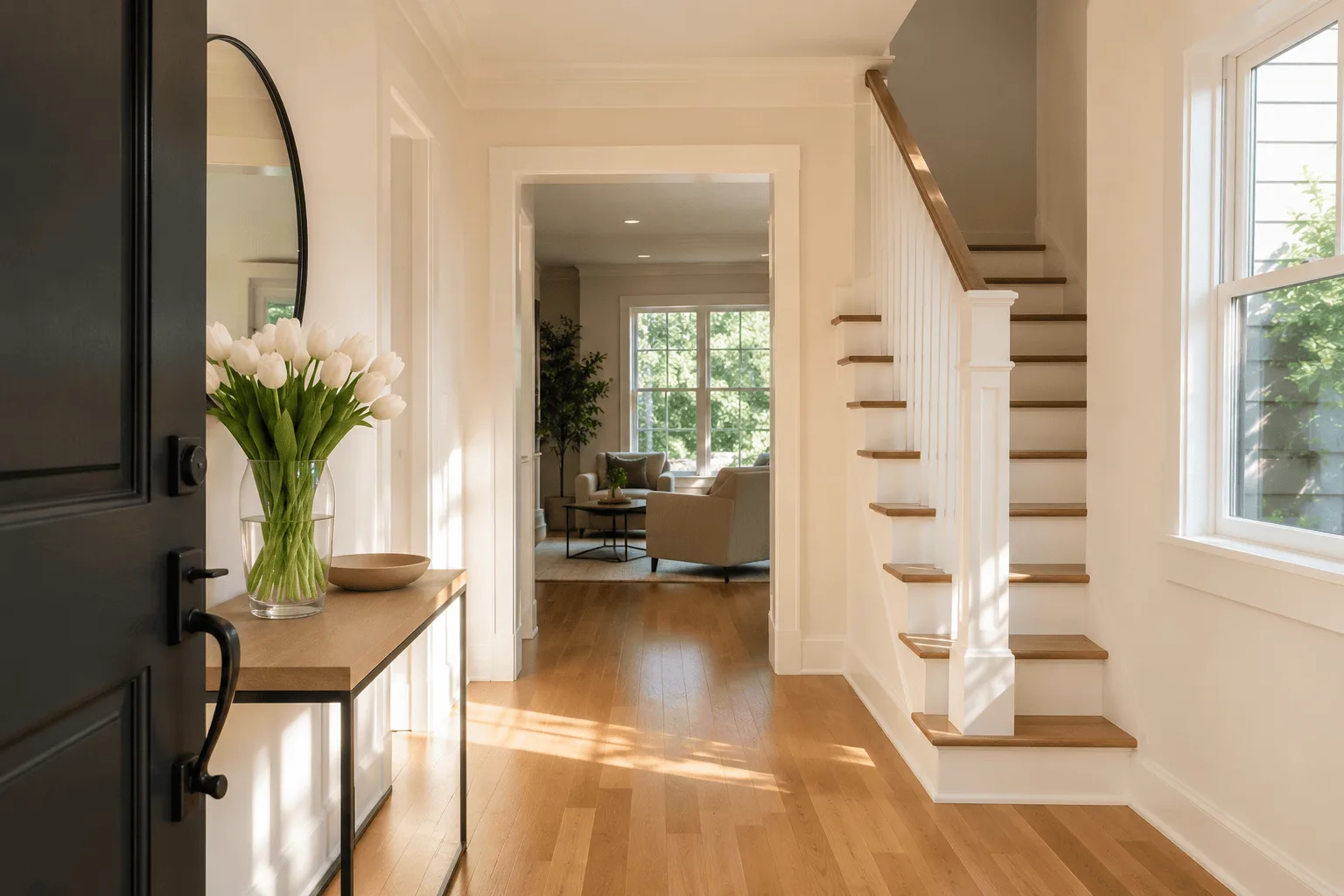
Spatial flow, lighting, and architecture alignment are key. Furniture should be scaled to the room, not crowded into it. Pathways should feel intentional. Sightlines should reward the buyer the moment they enter.
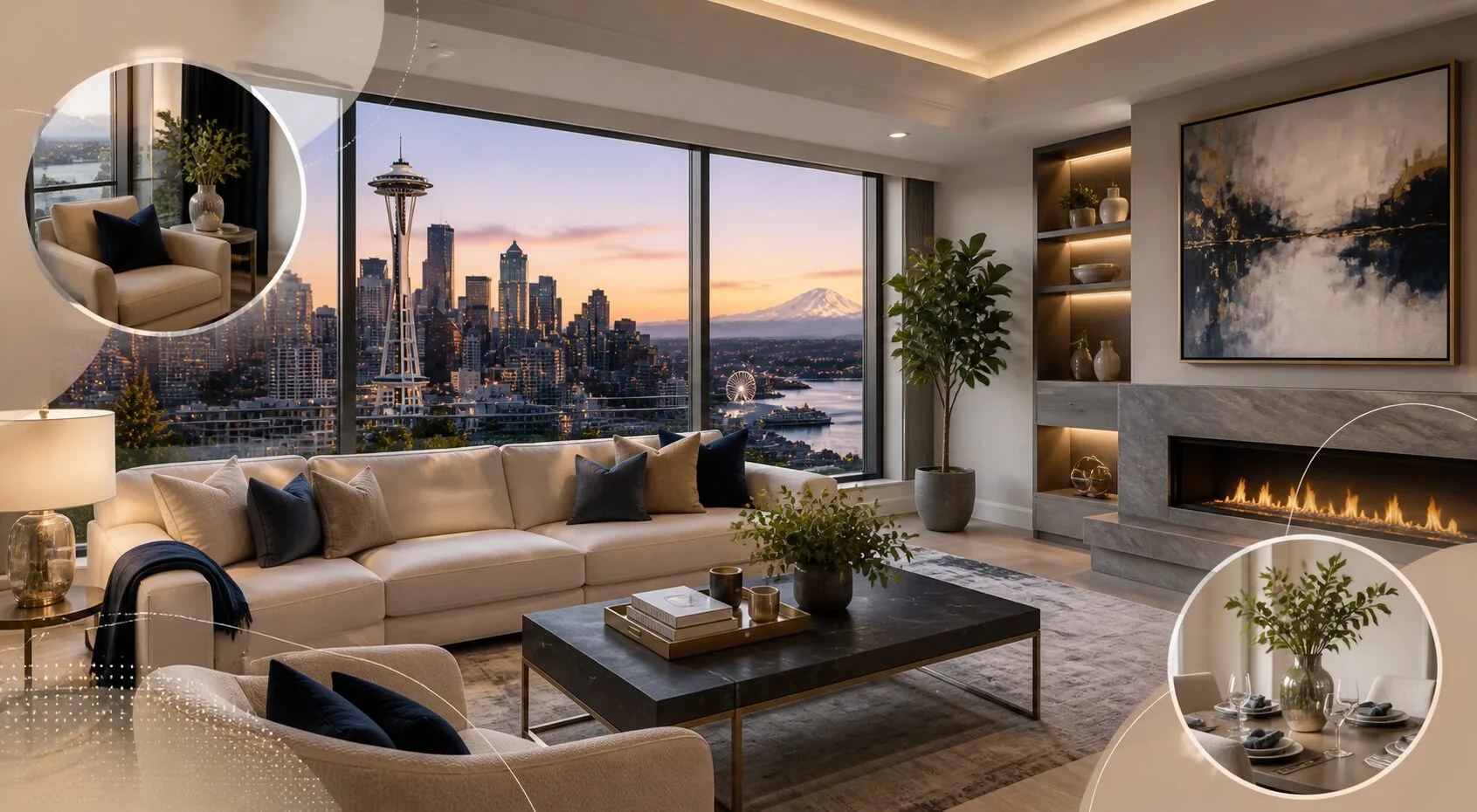
Lighting deserves particular attention in Seattle. Layered lighting — ambient, task, and accent — combats grey-day flatness and brings warmth to interiors that buyers feel immediately.
ROI of Strategic Staging
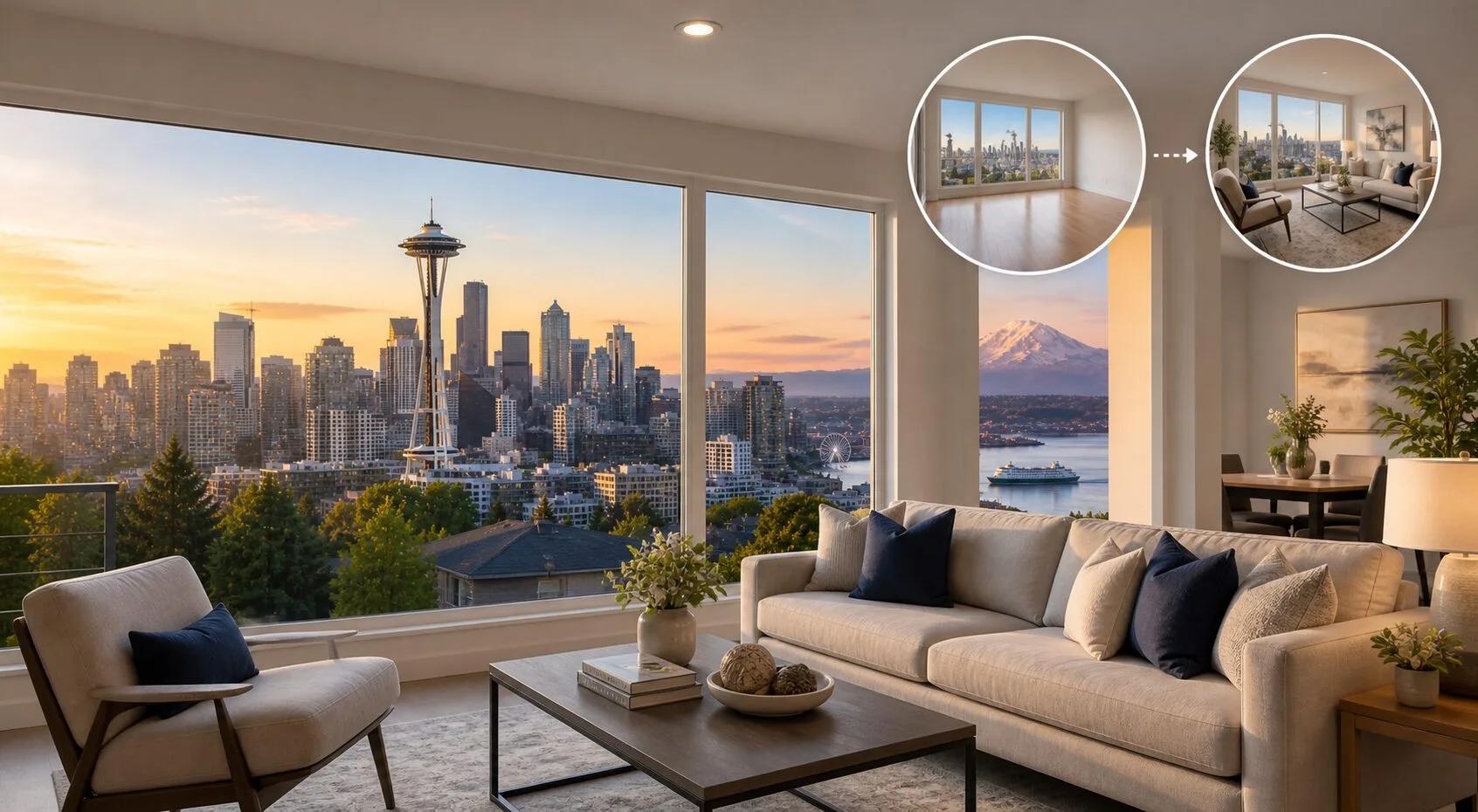
Staging increases perceived value and reduces time on market. In the luxury segment, the return is rarely linear — a beautifully staged listing can outperform comparable inventory by meaningful margins because the home is no longer just for sale, it's a story.
Meet the Expert
Christine Andreasen applies strategic staging insight to every listing. Her approach treats presentation as an investment, not a cosmetic line item — and the results show in both speed and price.
Staging is essential in competitive markets. At the luxury level, it's the difference between a listing buyers tour and a home they remember.
Luxury Home Selling
Staging is one part of a coordinated listing strategy. See how Christine's full preparation process is designed to maximize your sale.
Learn more →