Editorial insights from Seattle's high-end market.
A curated record of strategy, market commentary, and the quiet details that move outcomes — written for buyers, sellers, and owners weighing their next move in Seattle.
When you're only commuting two or three days a week, the calculus for choosing a neighborhood changes entirely. Here's how to build a framework around your actual work pattern instead of a daily-commute assumption that no longer applies.
Every buyer's guide stops at closing day. Almost nothing addresses the weeks right after — the utility setup, the homeowner tasks you didn't know you had, and the small decisions that are easiest to get right in the first 90 days and hardest to fix later.
Most buyers budget for a mortgage payment and stop there. Property tax is often the single largest ongoing cost after the mortgage itself — and it varies meaningfully by neighborhood, taxing district, and school levy. Here's how to actually budget for it before you buy.
Selling a rental property with a tenant currently living in it is a genuinely different process than selling a vacant home — different buyer pool, different legal notice requirements, and different timing considerations. Here's how to navigate it without disrupting your tenant or your sale.
California is consistently one of the largest sources of buyers relocating to Seattle. The tax picture, the property tax system, and the buying process are different enough that a general relocation guide isn't specific enough — here's what actually changes when you move from California to Washington.
Buying a duplex or triplex and living in one unit while renting the others — commonly called house-hacking — is one of the most underused strategies for a first home purchase in Seattle. Washington's 2023 middle housing law has made it more possible in more neighborhoods than ever.
Selling a home in Seattle involves more strategy — and more sequencing — than most sellers expect. This complete guide walks through every stage of the process, from pricing to closing, so you can move forward with a plan instead of guesswork.
Divorce forces real estate decisions on a timeline no one would choose — and Washington's community property laws shape those decisions in ways that surprise most people. Here's what actually happens to the house, the options beyond simply selling, and how to protect your interests.
Escrow is the most misunderstood part of a real estate transaction — most buyers and sellers know the term but not what actually happens inside it. Here's what the escrow company does, in what order, and how long it actually takes in Washington State.
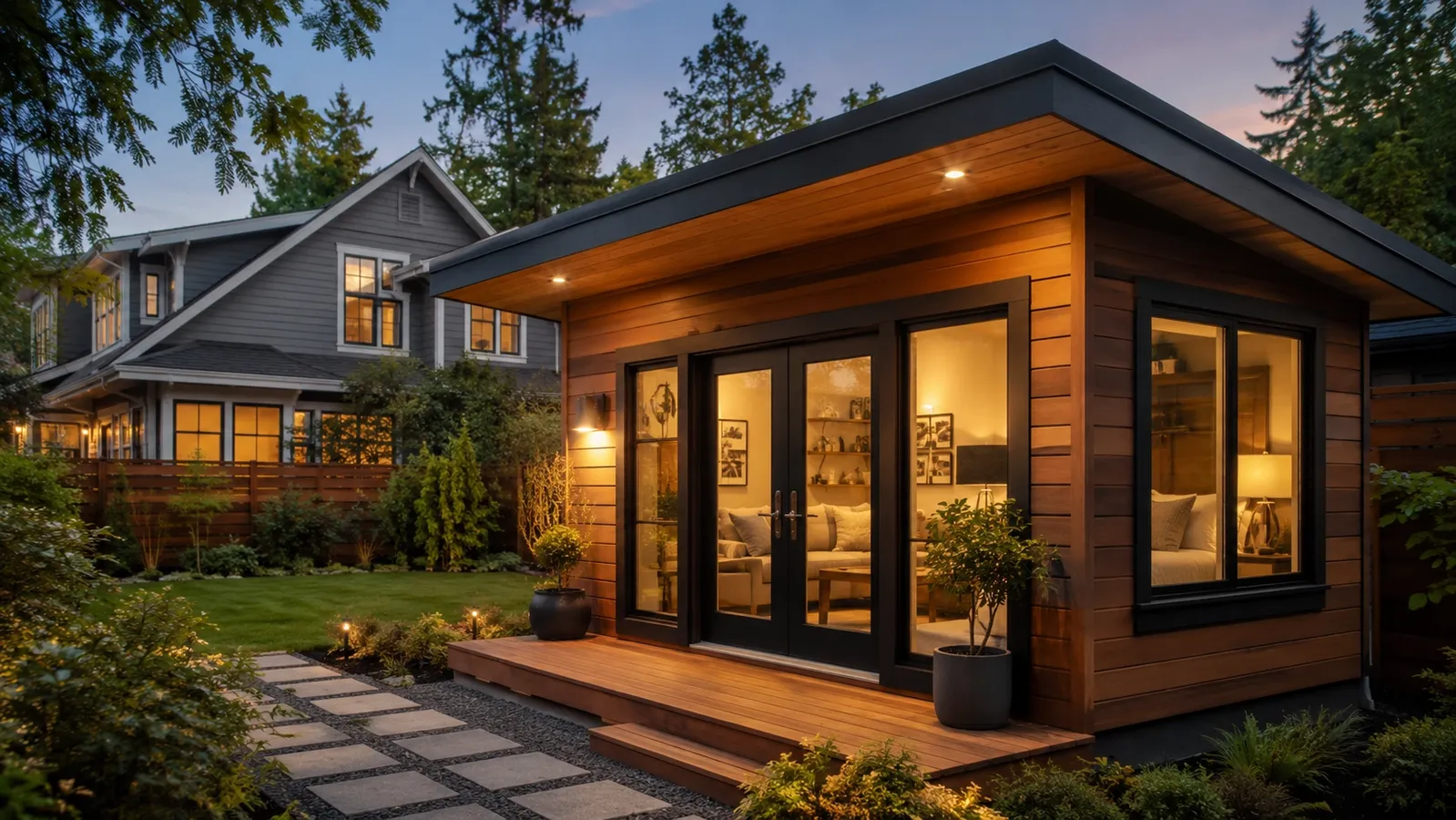
Washington's statewide zoning reform has made ADUs one of the most accessible ways to add rental income or multigenerational space to a Seattle property. Here's what it actually costs, what's allowed under 2026 rules, and how ADUs fit into a broader investment strategy.
Moving from a starter home into the $1M–$3M tier changes almost everything about how you search, finance, and compete — even for buyers who've purchased before. Here's what's genuinely different at this level, and how to navigate it with confidence the first time.
Inheriting a home in Seattle brings emotional weight and real financial decisions — probate timelines, a stepped-up tax basis that can eliminate most capital gains, and the question of whether to sell, rent, or keep the property. Here's what heirs actually need to know in 2026.
Buying before you sell means competing without a financing contingency — but it also means risking two mortgages at once. Here's how bridge loans, HELOCs, and rent-back agreements actually work in Seattle's 2026 market, and how to decide which timing strategy fits your situation.
Waterfront inventory in Seattle is tighter than it looks online — the best Lake Washington properties rarely hit Zillow. Here's what's actually for sale across every price tier, which lakes are most competitive right now, and how serious buyers are finding homes before they list.
The luxury market in Seattle moves differently than the rest of the city — constrained inventory, a small buyer pool, and pricing driven by factors algorithms can't read. Here's what's actually for sale, what you get at each tier, and how to compete as a buyer in 2026.
Bellevue has evolved from a Seattle suburb into one of the Pacific Northwest's most significant cities in its own right. For buyers in 2026, it offers top-ranked schools, a thriving downtown, and a luxury market with its own distinct logic.
Lake Washington divides more than geography — it divides two distinct approaches to living in the Pacific Northwest. Understanding what each side actually offers is the most important decision a Seattle-area buyer makes.
Magnolia occupies one of Seattle's most privileged positions — a bluff-top peninsula with views of Puget Sound, the Olympic Mountains, and the city skyline. Here is what buyers and sellers need to know in 2026.
Multiple offers still happen in Seattle's 2026 market — and they always will for the right home at the right price. Here is how buyers actually win: not just by bidding more, but by making an offer sellers genuinely trust.
A $1M home in Seattle requires roughly $200K down, $25K in closing costs, and 6 months of reserves — most buyers underestimate the full number by 30–40%. Here is the complete cost breakdown by price tier for 2026.
In Seattle's luxury market, 'The Sevens' refers to homes priced at $7 million and above — a tier defined not just by price, but by a completely different standard of buyer, marketing, and representation.
Selling a home in Seattle can trigger significant tax consequences — or none at all. Understanding the exclusion rules, timing strategies, and when to consult a professional can protect hundreds of thousands of dollars.
New construction offers warranties and modern systems. Existing homes offer character, location, and proven value. In Seattle's constrained market, understanding the trade-offs is essential before you commit.
Queen Anne offers one of Seattle's most distinctive combinations of elevated views, walkable charm, and architectural heritage. Here is what buyers and sellers need to know in 2026.
The 30 days before listing are when outcomes are made or missed. A disciplined, room-by-room preparation process is what separates homes that sell at premium prices from homes that sit.
Some of Seattle's best properties never reach the MLS. Understanding how off-market real estate works — and how to access it — gives serious buyers a meaningful edge in a competitive market.
Closing costs are one of the most misunderstood parts of a real estate transaction. In Seattle, both buyers and sellers face real costs at closing — understanding them upfront prevents surprises and enables smarter negotiating.
School district boundaries don't just determine where children go to school — they draw the invisible lines that separate premium-priced neighborhoods from comparable homes priced significantly lower just blocks away.
Condo or house — it's one of the most common decisions Seattle buyers face. Each involves different financial obligations, lifestyle trade-offs, and long-term considerations. Here is how to think through it clearly.
Downsizing in Seattle isn't about giving something up — it's about optimizing for the life you actually want to live. The right process makes the transition financially rewarding and surprisingly liberating.
Lake Washington waterfront starts at $3M — often 30–100% above comparable inland homes. Here's what drives Seattle waterfront premiums, what to inspect before buying, and which lakes and neighborhoods to target in 2026.
Moving to Seattle from outside the Pacific Northwest requires a different orientation than a local move. The neighborhoods, the market dynamics, and even the climate operate by their own rules — and the buyers who do best are the ones who do the work before they arrive.
Pricing a home in Seattle is not a formula — it is a strategy. The sellers who achieve the strongest outcomes are the ones who price with precision, not optimism. Here is how the process works when it is done right.
Mercer Island occupies a singular position in the Seattle metro: an island community with one of the state's best school districts, deep community identity, extraordinary lake access, and a price tier that reflects all of it. Here is what buyers need to know.
Seattle's real estate market follows seasonal rhythms that are distinct from the rest of the country. Knowing when to act — and why — is a genuine competitive advantage for both buyers and sellers.
Buying a home in Seattle involves more steps — and more nuance — than most first-time buyers anticipate. This complete guide walks through every stage of the process so you can move with confidence, not uncertainty.
The Seattle market has shifted into a more balanced, strategic environment. Stability, equity, and tech-driven demand keep the high-end resilient — but preparation now matters more than ever.
Luxury staging isn't decoration — it's a strategic process that aligns architecture, lifestyle, and buyer psychology to elevate value and accelerate a sale.
The right team isn't the loudest one. It's the one that combines local depth, strategic clarity, and steady communication — and proves it before you sign anything.