What Defines Magnolia as a Place
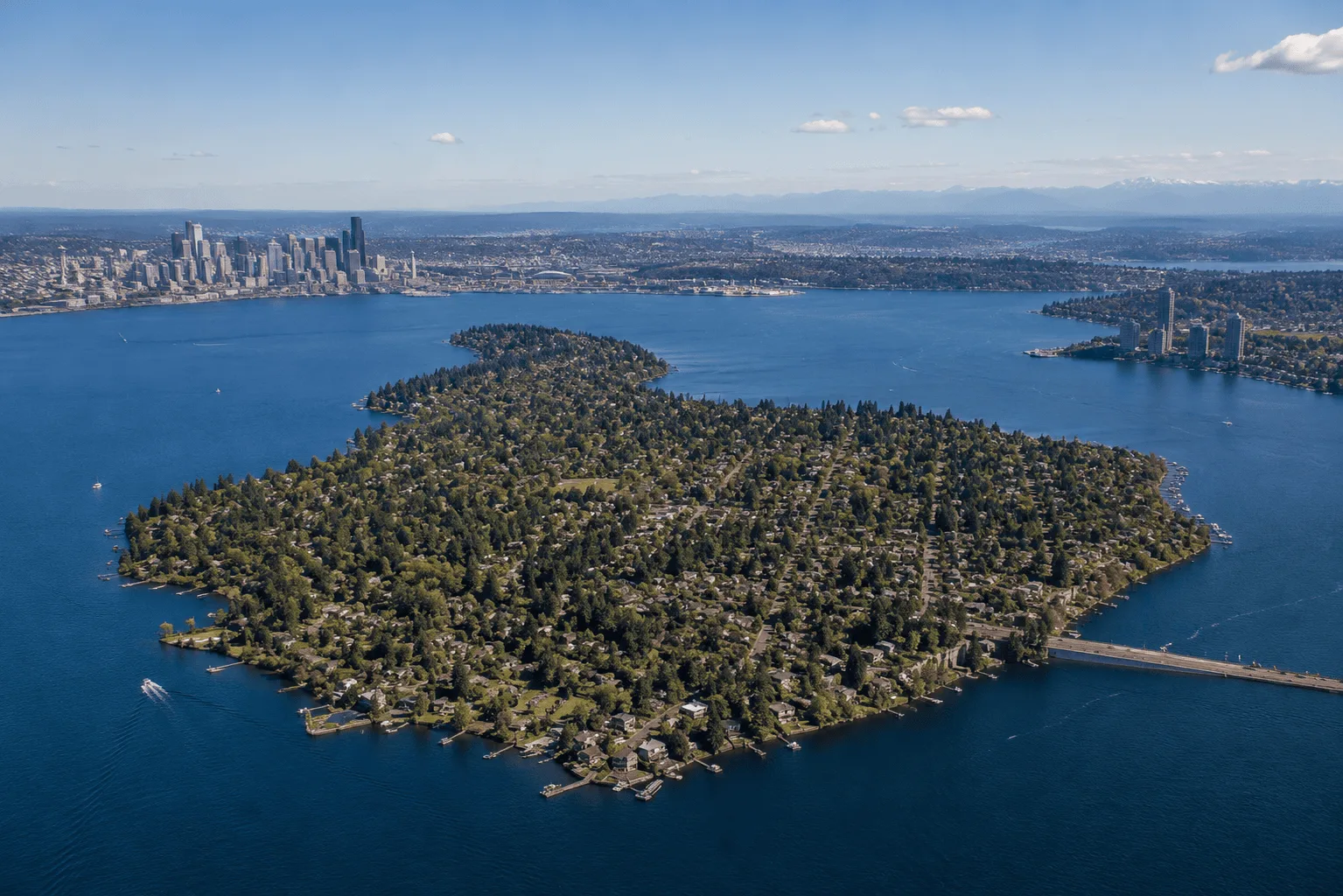
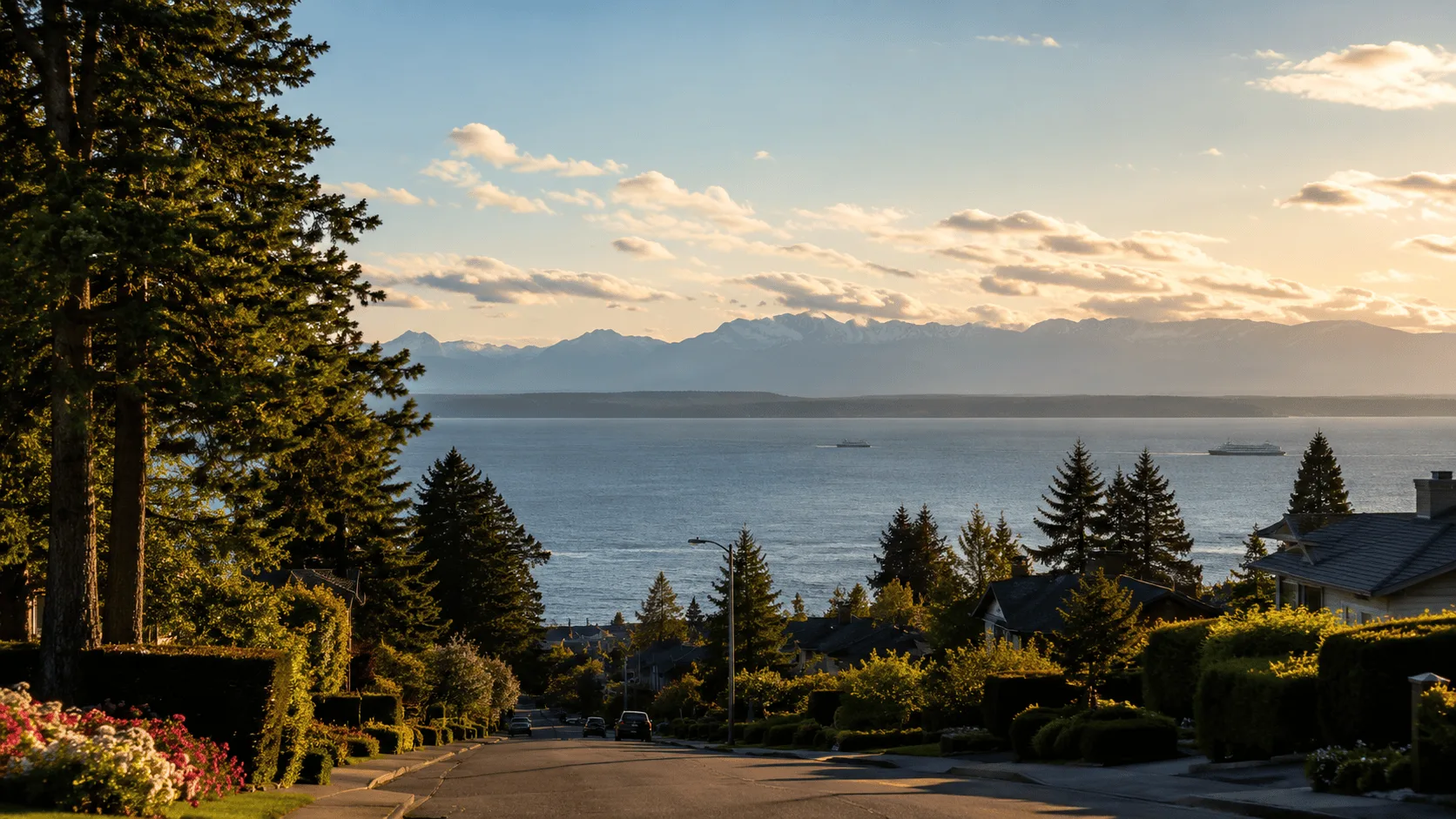
Magnolia sits on a bluff-topped peninsula west of Interbay, surrounded by Puget Sound on three sides. Its geography is its identity: elevated, quiet, and distinctly removed from the density of central Seattle — while remaining minutes from downtown by car. The result is a neighborhood that feels like a small town inside a major city, a quality that draws buyers who have lived elsewhere and want something different.
The neighborhood is named after what early settlers mistakenly identified as magnolia trees — they were madrona trees — but the name stuck, and so did the character. Magnolia's streets are predominantly residential, lined with mature evergreens, well-maintained homes, and the kind of unhurried pace that is increasingly rare in Seattle's growing urban core.
Architecture and Housing Stock
Magnolia's housing stock is defined by mid-century construction from the 1950s through the 1970s — ranches, split-levels, and colonial-style homes that have been updated to varying degrees. Many have been extensively renovated, and the neighborhood has attracted a wave of design-forward buyers who have rebuilt aging structures into architecturally significant custom homes.
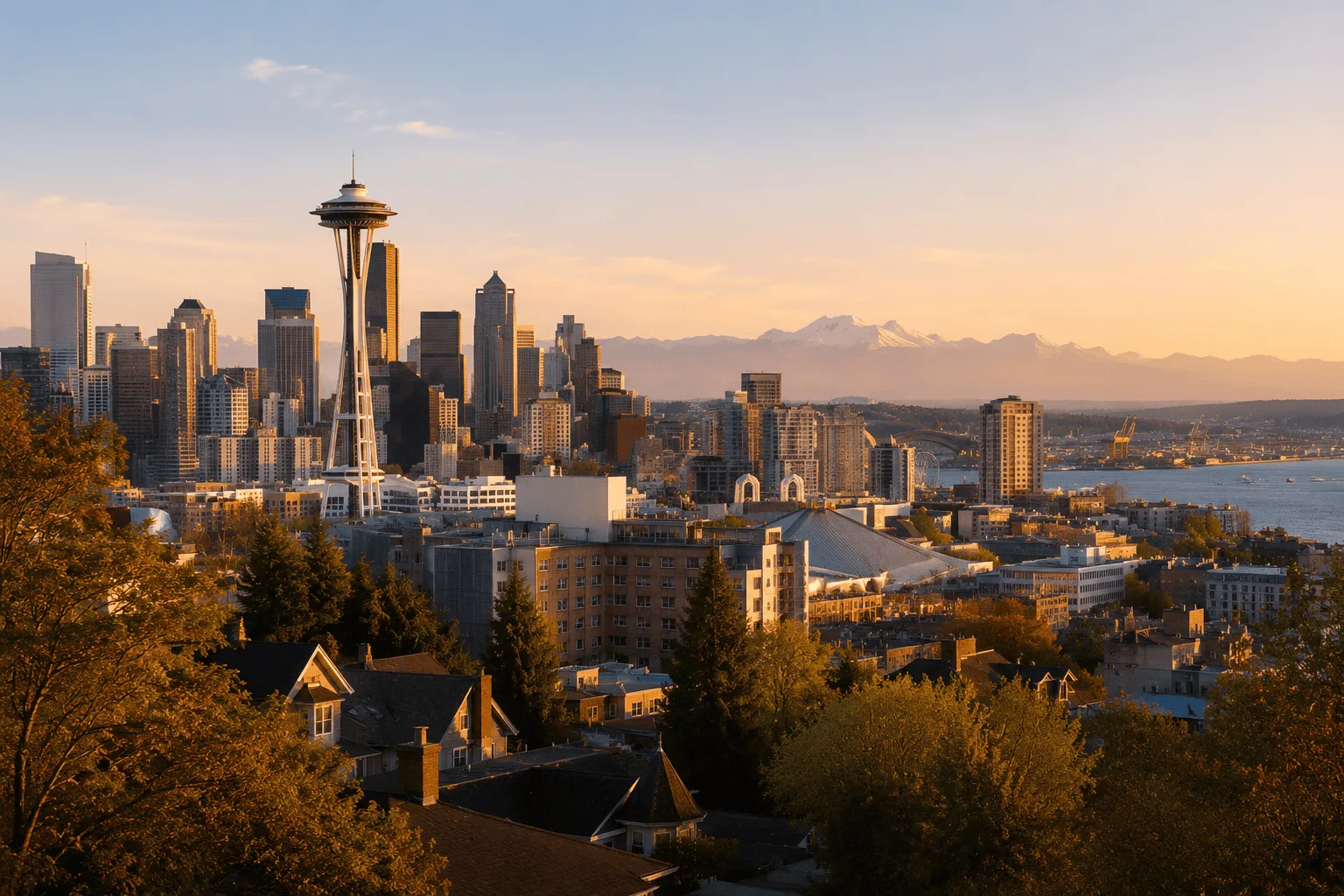
The bluff lots are the most coveted: elevated parcels with unobstructed views of Puget Sound, the Olympic Mountains, and the downtown skyline. These view lots command the highest premiums and attract buyers from across the city who specifically seek them out. Interior lots are more accessible in price and still benefit from the neighborhood's character and community.
Newer construction — townhomes and smaller infill homes — appears in pockets, particularly near the village center. However, density is far lower than in Seattle's eastern and northern neighborhoods. Magnolia is predominantly single-family, and that character is unlikely to change significantly given zoning and community organization.
Discovery Park: Magnolia's Defining Amenity
Discovery Park is Seattle's largest park — 534 acres of forests, meadows, bluffs, and beaches on the northern tip of the Magnolia peninsula. For residents, it functions as an extension of their backyard: morning runs on miles of wooded trails, afternoon walks to the West Point Lighthouse, and access to Puget Sound beaches that feel completely removed from the urban environment.
The park's scale and natural character have no equivalent in Seattle's other neighborhoods. It draws residents from across the city, but Magnolia residents have it at their doorstep. This access is a genuine quality-of-life differentiator that buyers who have lived near Discovery Park consistently cite as the reason they stayed — or returned.
Pricing in 2026
Entry-level Magnolia — smaller homes on interior lots in need of updating — begins around $900,000 to $1.1 million. Renovated three- and four-bedroom homes in non-view positions range from $1.2 million to $1.8 million. View properties — particularly those on Magnolia Boulevard or the bluff above Puget Sound — begin at $2 million and rise well beyond $4 million for the most exceptional architectural examples.
The gap between view and non-view pricing in Magnolia is among the most pronounced in Seattle. A renovated home on a flat interior lot and a comparable home with a direct Puget Sound view can differ by $600,000 to $1.2 million or more. Buyers who are flexible on view should understand that interior lots offer substantially more value per square foot without sacrificing neighborhood access.
Magnolia Village: Lifestyle and Walkability
Magnolia Village — centered along 32nd Avenue West — is a compact, authentic neighborhood business district: independent coffee shops, a grocery store, restaurants, a hardware store, a yoga studio, and the kind of community retail that defines a genuinely livable neighborhood. It is not a destination for outsiders; it exists for residents, which is precisely what makes it valuable.
Walkability within the neighborhood is good for a residential area, though the peninsula's geography means that most residents drive to reach destinations outside Magnolia. The bluff and the park create a self-contained quality of life that many residents choose intentionally — and the trade-off of car dependency is one most find entirely acceptable.
Schools and Community
Magnolia is primarily served by Seattle Public Schools. Catharine Blaine K-8 is the neighborhood's anchor public school — a K-8 program with strong community involvement and consistent performance. McClure Middle School and Ballard High School serve upper grades for residents outside the Blaine attendance area.
The neighborhood has a strong community identity supported by the Magnolia Community Council, active block watch programs, and a community organization culture that reflects the demographic profile of long-term homeowners. Families who move to Magnolia tend to stay — and the resale market reflects that stability.
Commute and Connectivity
Magnolia's geography creates a commute consideration that buyers should understand. The neighborhood is connected to the rest of Seattle by a limited number of arterials: the 15th Avenue West corridor through Interbay is the primary route to downtown and South Lake Union, while the Magnolia Bridge (currently under study for replacement or reconstruction) serves the south end of the neighborhood.
Drive times to downtown Seattle average 15 to 25 minutes depending on time of day and route. There is no light rail access on the peninsula, and bus service, while functional, is not frequent enough to serve as a daily commute alternative for most residents. Magnolia is best suited to buyers who drive to work or work remotely — and many of its residents cite that flexibility as a reason they chose the neighborhood.
Market Dynamics for Buyers and Sellers
Magnolia is a structurally constrained market. The peninsula is fully built out, bounded by water and park land, with no meaningful new supply possible at scale. This scarcity supports price resilience over time and creates a market where correctly positioned homes — particularly view properties — consistently generate strong interest.
Sellers who own view lots on the bluff or boulevard hold some of the most defensible equity positions in Seattle. The combination of irreplaceable view orientation, established neighborhood character, and proximity to Discovery Park creates a buyer profile that is both affluent and emotionally committed — a combination that favors sellers in well-run processes.
Magnolia is a neighborhood that holds its value because it holds its character. The buyers who find it tend not to leave — and those looking to enter should move decisively when the right property appears.
Luxury Homes Seattle
Magnolia is one of Seattle's most distinctive luxury pockets. Christine has deep experience guiding buyers and sellers through this market specifically.
Learn more →