The State of Seattle Waterfront Inventory in 2026
Seattle waterfront is among the most constrained residential asset classes in the Pacific Northwest. Lake Washington has a fixed shoreline, a near-zero rate of new waterfront lot creation, and a buyer pool that extends nationally and internationally. The result is a market where supply is measured in dozens, not hundreds, and where a well-priced property in the right position will attract multiple offers regardless of broader market conditions.
Active listings across all of Lake Washington's waterfront — both shores combined — typically number between 30 and 50 at any given moment. That inventory is spread across Bellevue, Kirkland, Mercer Island, Medina, Clyde Hill, Kenmore, Bothell, and the Seattle neighborhoods of Laurelhurst, Madrona, and Leschi. When you filter for specific criteria — minimum frontage, dock rights, south or west facing — the realistic options often number in single digits.
This structural scarcity is the defining characteristic of the Seattle waterfront market. It means price discovery is driven by individual negotiation rather than broad comparable sales, it means off-market relationships matter more here than in any other segment, and it means buyers who move slowly often watch the property they wanted disappear while they were deliberating.
Lake Washington: The Premier Tier
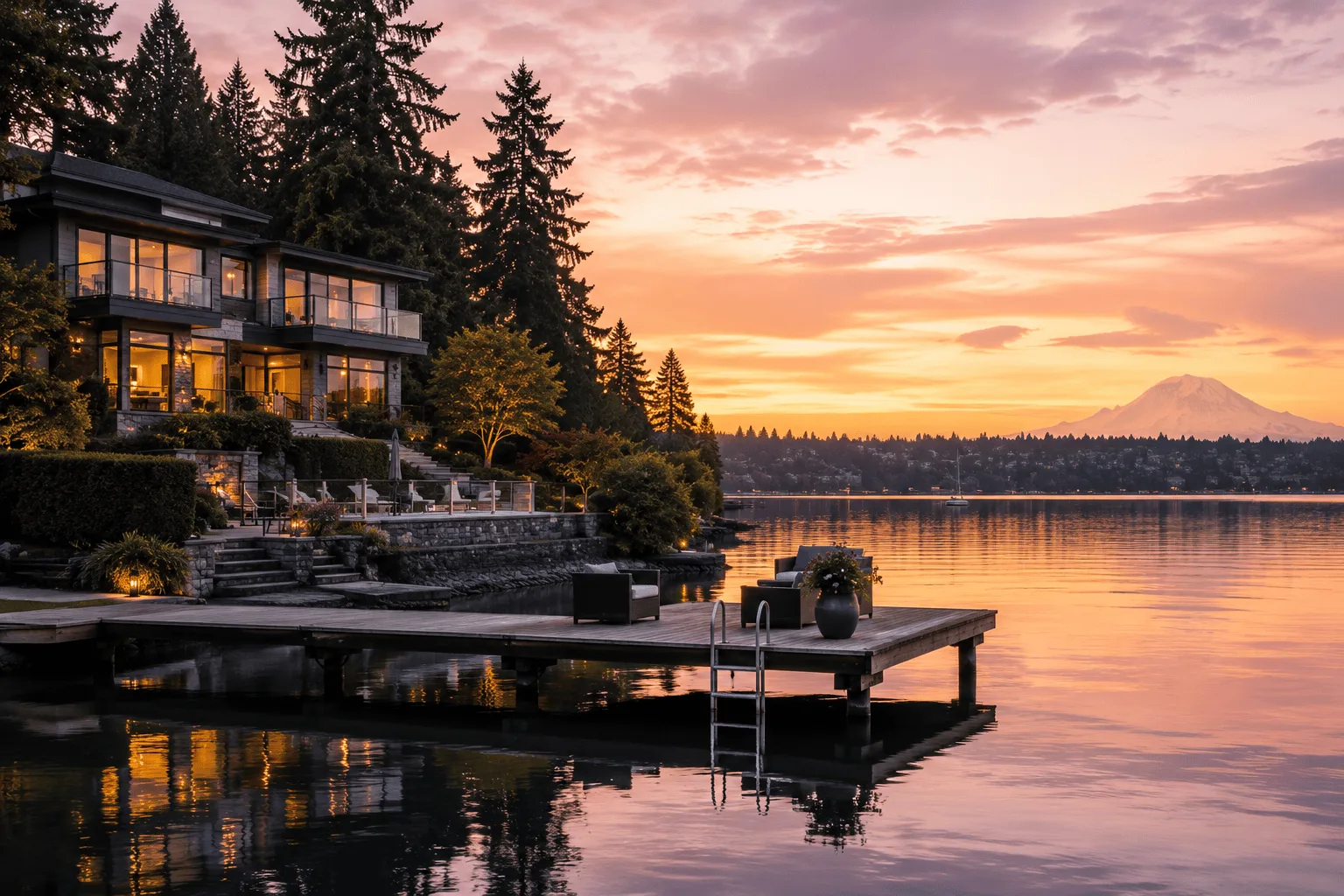
Lake Washington waterfront is Seattle's most prestigious residential category. The west shore — encompassing Seattle neighborhoods like Laurelhurst, Madrona, and Leschi — commands the highest prices due to proximity to the city, established neighborhood character, and sunset views over the Olympics. Properties here range from $5 million for older homes with strong waterfront positions to well over $20 million for contemporary estates with maximum frontage and private dock infrastructure.
The east shore — Bellevue, Kirkland, Medina, and Mercer Island — offers different value. Bellevue and Kirkland provide proximity to the Eastside tech corridor, Bellevue School District access, and a slightly more accessible entry point relative to the west shore. Medina and Clyde Hill remain the most exclusive addresses on the lake — the small peninsulas where home values routinely exceed $10 to $15 million for premier positions.
Mercer Island occupies a category of its own. Every home on the island is within roughly a mile of the shoreline, and true waterfront properties circle the perimeter. The island's self-contained community character, top-ranked school district, and central position between Seattle and Bellevue create a buyer profile that is distinct from both shores of the mainland. Waterfront homes on Mercer Island range from $5 million to over $15 million.
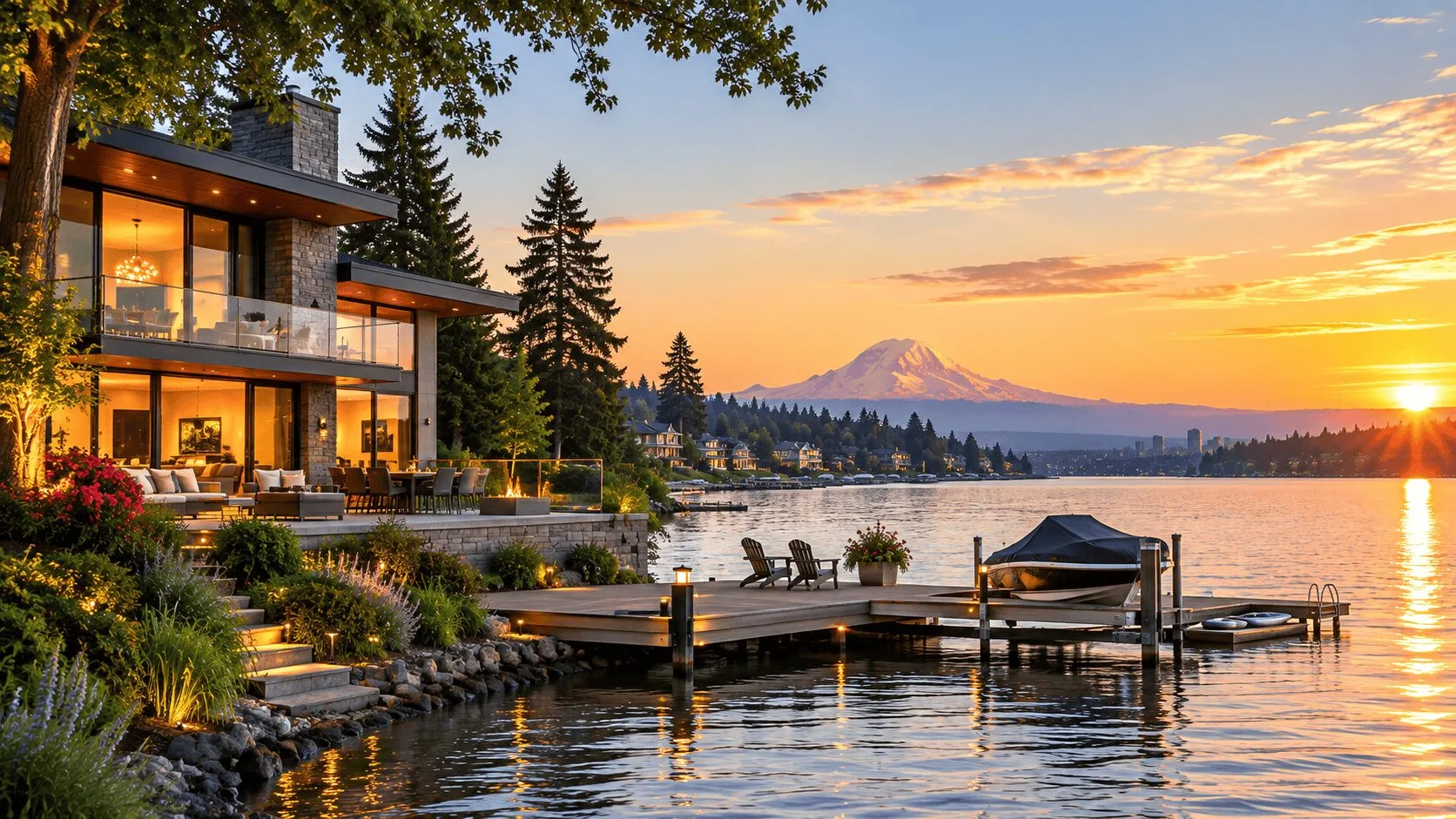
One under-discussed variable: dock condition and permitting. A functioning private dock on Lake Washington can add $500,000 to $1.5 million to a property's value relative to undocked waterfront. Docks that were built without permits or that require replacement introduce regulatory complexity that buyers should evaluate carefully before closing — shoreline regulations have tightened, and unpermitted structures carry real risk.
Puget Sound Waterfront: A Different Character
Puget Sound waterfront operates on fundamentally different terms than Lake Washington. The Sound is tidal, saltwater, and open — which means dramatically different views, different maintenance requirements (salt air affects everything from roofing to decking to mechanical systems), and a different lifestyle. The trade-off is access to mountain and island views that Lake Washington cannot match, and price points that are more accessible at the entry level.
The primary Puget Sound waterfront areas for residential buyers are: West Seattle (Alki and Beach Drive), Shoreline and Edmonds to the north, Des Moines and Burien to the south, and more remote reaches of Kitsap and Vashon Island for buyers seeking greater seclusion. In West Seattle, Puget Sound waterfront begins around $1.5 million for modest older homes and climbs to $4 to $5 million for larger homes with significant frontage and unobstructed mountain views.
Tidal range on the Sound — up to 12 feet in some locations — affects dock usability meaningfully. Float-plane access, larger vessel moorage, and recreational boating on the Sound require different dock structures than Lake Washington. Buyers planning to keep boats should evaluate the site-specific tidal conditions, dock depth, and wave exposure before committing.
Lake Union and the Urban Waterfront
Lake Union is the most urban of Seattle's primary water bodies — surrounded by South Lake Union, Eastlake, Westlake, and Fremont, and bisected by the ship canal connecting it to Puget Sound and Lake Washington. Waterfront homes on Lake Union are rarer than the surrounding development density suggests; much of the shoreline is occupied by marinas, houseboats, and commercial uses.
True residential waterfront on Lake Union typically comes in the form of floating homes or upland homes with direct water access — both of which carry their own due diligence requirements. Floating home ownership involves a moorage slip lease (not land ownership), which affects financing, appreciation, and estate planning in ways buyers should understand before purchase. The lifestyle — living on the water in the center of the city — is genuinely unlike anything else in the Seattle market.
Lake Sammamish, on the Eastside between Issaquah and Redmond, offers a quieter alternative to Lake Washington at a lower entry point. Waterfront homes here start around $1.2 million for older homes on the north and south ends and climb to $3 to $4 million for renovated homes with strong positions and south-facing orientation. The lake's smaller size and recreational character attract families and buyers prioritizing quiet over prestige.
Finding Waterfront Homes Before They Hit the Market
A meaningful portion of Lake Washington waterfront trades off-market — conservatively estimated at 25 to 40 percent of transactions in any given year, with higher concentrations at the $7 million and above tier. Sellers at this level often have no interest in public exposure: they do not want open houses, do not want their property photographed for Zillow, and have advisors who can identify qualified buyers directly. The listing never exists.
Accessing this inventory requires the right relationships. Advisors who have transacted multiple times in a specific waterfront neighborhood have earned the phone calls when those owners begin to think about selling. Advisors who operate primarily through advertising and MLS exposure will not receive those calls. For buyers whose target property is a specific type of waterfront home in a specific location, working with an advisor who has deep existing relationships in that area is the single most important variable in the search.
Proactive outreach — identifying properties that match a buyer's criteria and reaching out to owners directly, even before the owner has considered selling — is a legitimate and often effective strategy at this level. It requires a buyer willing to move decisively when the right door opens, and an advisor capable of structuring that conversation in a way that produces a transaction rather than an awkward interaction.
Seattle waterfront is not a category where patience is consistently rewarded. The best positions are held by owners who rarely sell, and when they do sell, the buyers who are ready — relationships established, financing arranged, criteria clearly defined — are the ones who close. Preparation is the competitive advantage.
Seattle Waterfront Homes
Christine specializes in waterfront transactions across Lake Washington, Puget Sound, and Lake Sammamish — including off-market inventory. Learn how the search process works.
Learn more →