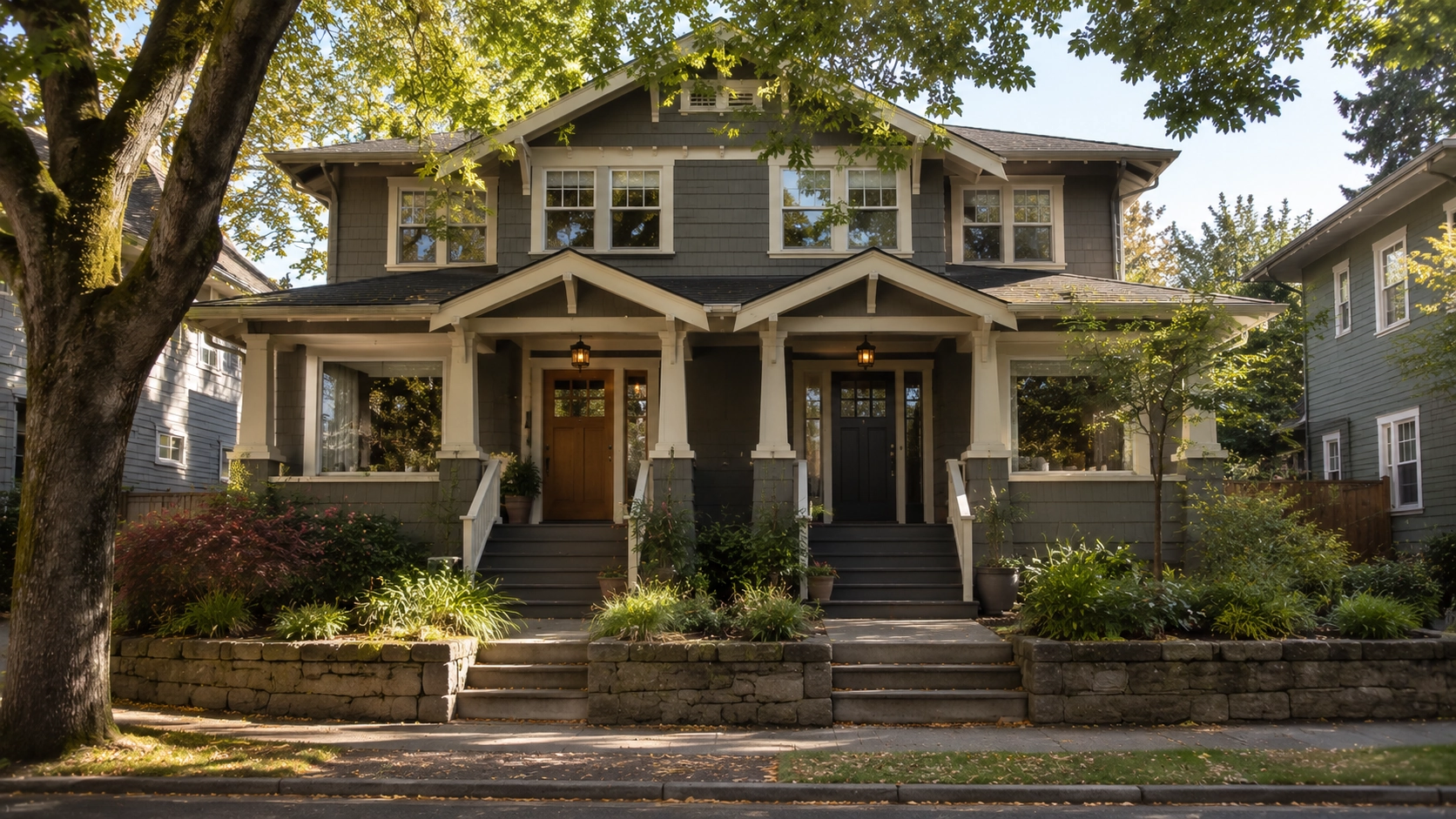
What Is House-Hacking, and Why It Works in Seattle
House-hacking means buying a property with more than one unit, living in one of them, and renting the others. The rental income offsets some or all of your mortgage payment, which can make homeownership more affordable than renting a comparable single unit — while you build equity in an asset instead of paying a landlord.
Seattle's rental demand, driven by a large renter population near major employment centers, makes this strategy particularly viable here. A well-located duplex or triplex in a desirable neighborhood often rents readily, and the strategy works best in areas with strong, consistent rental demand rather than markets where vacancy risk is high — the same fundamentals that make ADUs work as an investment strategy elsewhere in the city.
Financing a Duplex or Triplex as Your Primary Residence
Because you'll be living in the property, you may qualify for owner-occupant financing on buildings with up to four units — including FHA loans, which typically require a significantly lower down payment than conventional investment-property financing would. Lenders will generally count a portion of the property's rental income toward your qualifying income, though the exact percentage varies by loan program.
Work with a lender experienced in multi-unit owner-occupant financing specifically — not every loan officer regularly handles these transactions, and the underwriting details (reserve requirements, rental income documentation, appraisal type) differ meaningfully from a standard single-family purchase.
Zoning: Where Multi-Unit Owner-Occupant Purchases Make Sense in Seattle
Washington's 2023 middle housing legislation (House Bill 1110) requires most cities, including Seattle, to allow duplexes, triplexes, and fourplexes on lots that were previously zoned exclusively for single-family homes, with even greater density allowed near frequent transit service. This has meaningfully expanded the map of where a legal multi-unit purchase — or future multi-unit redevelopment — is possible.
Existing legal duplexes and triplexes remain concentrated in specific pockets of the city built before stricter single-family zoning took hold decades ago. An advisor or a zoning-savvy inspector can confirm a specific property's legal unit count and any permitting history before you write an offer — this is not a detail to assume from a listing description alone.
Running the Numbers: Rent Offset vs. Total Housing Cost
The core math is simple to state and worth running carefully: total mortgage payment, property tax, insurance, and maintenance reserve, minus realistic (not optimistic) rental income from the other units, equals your true net housing cost. Use conservative rent estimates and include a vacancy allowance — assuming 100% occupancy year-round is the most common modeling mistake first-time house-hackers make.
Also budget for landlord-specific costs that a typical single-family buyer wouldn't: separate unit maintenance, potential tenant turnover costs, and — if the building is older — the likelihood of deferred maintenance across multiple units rather than just one.
Being a Landlord in Your Own Building
Living in the same building as your tenants is a genuinely different experience than owning a rental property elsewhere in the city. It can mean faster response to maintenance issues and closer oversight, but it also means less separation between your home life and your role as a landlord. Some owners prefer this closeness; others find it wears on them over time.
Understand Seattle's landlord-tenant regulations before you close, including notice requirements and tenant protections that apply regardless of whether you live on-site. These rules are not optional based on the size of the building or your personal relationship with tenants.
Exit Strategy: What Happens When You're Ready to Move On
House-hacked properties are flexible on exit. You can sell the building outright, move out and convert your former unit into an additional rental (turning the whole property into a straight investment), or use the equity you've built to help finance your next home purchase. Buyers who think through this exit question before they buy tend to make better property-selection decisions from the start — a building with strong rental fundamentals is a better long-term asset regardless of which exit you eventually choose.
Common Mistakes First-Time House-Hackers Make
Overestimating rental income: First-time house-hackers commonly use best-case rent figures rather than conservative, verified comparables, which can make a property look more affordable on paper than it will actually be to own.
Skipping a landlord-specific inspection focus: Beyond a standard home inspection, multi-unit buildings benefit from close attention to shared systems — roof, foundation, plumbing, and electrical serving multiple units — since a shared-system repair affects your entire rental income, not just your own living space.
House-hacking isn't the right strategy for every buyer, but for the right buyer — someone comfortable being a hands-on landlord, willing to run the numbers conservatively, and looking for a genuinely different way into Seattle homeownership — it can turn a first home purchase into an income-generating asset from day one.
Seattle Investment Property Guidance
Considering a duplex, triplex, or fourplex as your first home? Christine can walk you through the numbers, the zoning, and the financing before you write an offer.
Learn more →